
NBA GameTime: A Watch-to-Earn Engagement System for the Streaming Era
Abstract
In the modern NBA, a paradox has emerged:
fandom is booming online even as live game viewership stagnates or declines
1
 The NBA’s Ratings Rebound – Sports & Entertainment Law Journal
2
The NBA’s Ratings Rebound – Sports & Entertainment Law Journal
2
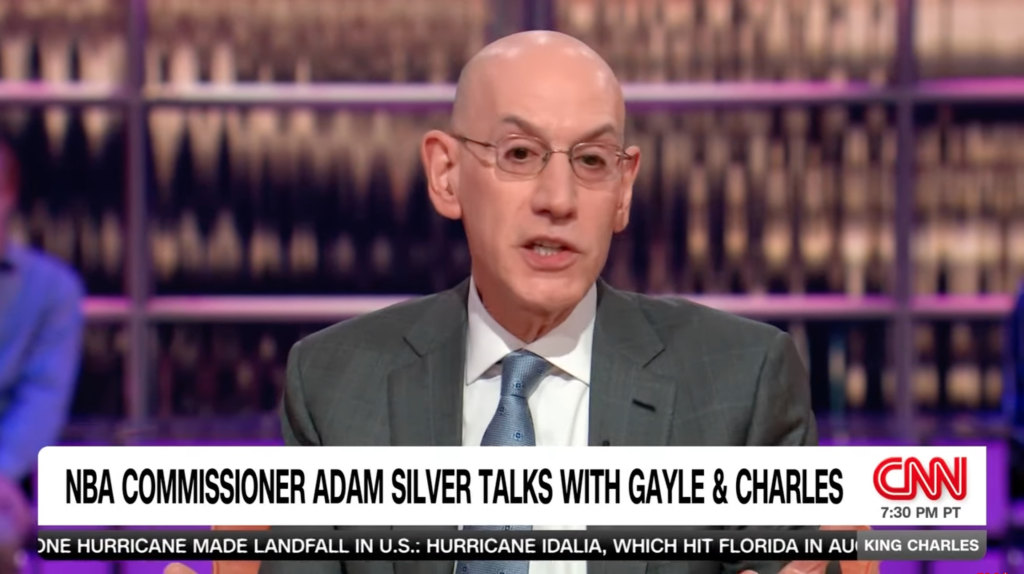 Adam Silver downplays NBA social media dominance
.
Fans today voraciously consume NBA content on Reddit, Twitter, YouTube, podcasts, and fantasy platforms –
staying informed on every trade and meme – yet many no longer watch full games.
This disconnect poses an existential challenge for the league and its media partners,
whose revenue models still rely on live broadcasts
3
Survey: Sports fans increasingly prefer highlights – Axios
.
Adam Silver downplays NBA social media dominance
.
Fans today voraciously consume NBA content on Reddit, Twitter, YouTube, podcasts, and fantasy platforms –
staying informed on every trade and meme – yet many no longer watch full games.
This disconnect poses an existential challenge for the league and its media partners,
whose revenue models still rely on live broadcasts
3
Survey: Sports fans increasingly prefer highlights – Axios
.
I propose NBA GameTime, a league-sanctioned “watch-to-earn” platform that rewards fans for actually watching games. By logging viewership across all broadcast and streaming partners and converting watch time into points, status, and tangible rewards, GameTime realigns fan behavior with league objectives. This paper outlines how GameTime can make watching games matter again – turning viewership into a measurable currency, bolstering fan loyalty, providing richer engagement data, and sparking a cultural movement around being a true NBA fan.
1. The Viewership Paradox
The NBA has never been more ubiquitous in digital culture – yet this widespread engagement hasn’t translated into equal enthusiasm for live broadcasts.
Regular-season TV ratings have steadily declined since the early 2010s
4
The NBA’s Ratings Rebound – Sports & Entertainment Law Journal
,
and even the 2024–25 season averaged only about 1.5 million viewers on national TV (a slight drop from the year before)
5
 NBA regular season viewership sees slight decline – Sports Media Watch
.
NBA Finals viewership has seen similar erosion since the mid-2010s
4
The NBA’s Ratings Rebound – Sports & Entertainment Law Journal
.
At the same time, the league’s online footprint has exploded.
Social media views of NBA content jumped 41% recently even as television audiences fell by 5%
1
The NBA’s Ratings Rebound – Sports & Entertainment Law Journal
.
Commissioner Adam Silver himself acknowledges that “they feast on social media... but it’s not a substitute for watching live games”,
noting that popularity on Instagram or YouTube alone cannot support the league’s bottom line
2
Adam Silver downplays NBA social media dominance
6
Adam Silver downplays NBA social media dominance
.
In short, everyone seems to call themselves an NBA fan, yet fewer people are actually tuning in to full games.
This is the NBA’s viewership paradox – a league that dominates the cultural conversation and youth engagement,
but struggles to get those same fans to pick up the remote or open a stream on game night
7
Adam Silver downplays NBA social media dominance
8
Survey: Sports fans increasingly prefer highlights – Axios
.
NBA regular season viewership sees slight decline – Sports Media Watch
.
NBA Finals viewership has seen similar erosion since the mid-2010s
4
The NBA’s Ratings Rebound – Sports & Entertainment Law Journal
.
At the same time, the league’s online footprint has exploded.
Social media views of NBA content jumped 41% recently even as television audiences fell by 5%
1
The NBA’s Ratings Rebound – Sports & Entertainment Law Journal
.
Commissioner Adam Silver himself acknowledges that “they feast on social media... but it’s not a substitute for watching live games”,
noting that popularity on Instagram or YouTube alone cannot support the league’s bottom line
2
Adam Silver downplays NBA social media dominance
6
Adam Silver downplays NBA social media dominance
.
In short, everyone seems to call themselves an NBA fan, yet fewer people are actually tuning in to full games.
This is the NBA’s viewership paradox – a league that dominates the cultural conversation and youth engagement,
but struggles to get those same fans to pick up the remote or open a stream on game night
7
Adam Silver downplays NBA social media dominance
8
Survey: Sports fans increasingly prefer highlights – Axios
.
Several factors created this paradox.
The NBA’s global, digital-first marketing strategy cultivated a massive online fanbase.
The league embraced highlight sharing on social platforms (treating highlights as “snacks” to entice fans toward the “meal” of full games)
9
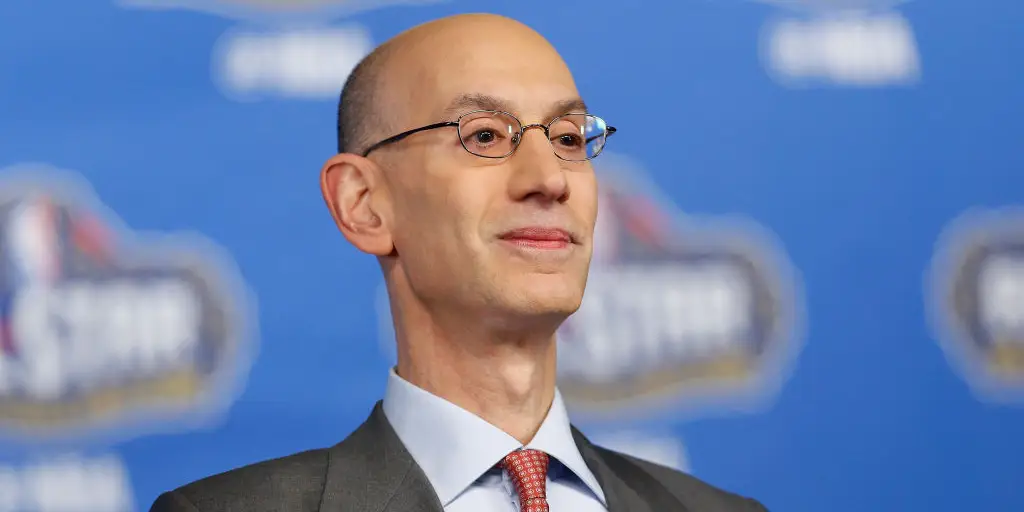 Adam Silver on highlight sharing – Business Insider
,
and it worked in growing overall interest.
By 2018, the NBA was hailed as an innovator in fan engagement,
with a lenient policy on GIFs and YouTube clips that other leagues wouldn’t dare
10
Adam Silver on highlight sharing – Business Insider
.
The result: today’s fans are hyper-informed and constantly interacting with NBA content – just not in the traditional way.
A fan can absorb a game’s worth of drama and storylines through Twitter debates, subreddits, and highlight reels
without ever sitting through four quarters of play.
The online NBA community is vibrant and huge, yet traditional TV metrics count these engaged individuals as “absent.”
This gap between engagement and viewership is more than just a quirk of modern fandom – it’s a fundamental business threat.
Media rights deals worth tens of billions of dollars are predicated on fans actually watching games and advertisements
3
Survey: Sports fans increasingly prefer highlights – Axios
.
If “everyone’s a fan but no one watches the games,” the value proposition for broadcasters and sponsors begins to crumble.
Adam Silver on highlight sharing – Business Insider
,
and it worked in growing overall interest.
By 2018, the NBA was hailed as an innovator in fan engagement,
with a lenient policy on GIFs and YouTube clips that other leagues wouldn’t dare
10
Adam Silver on highlight sharing – Business Insider
.
The result: today’s fans are hyper-informed and constantly interacting with NBA content – just not in the traditional way.
A fan can absorb a game’s worth of drama and storylines through Twitter debates, subreddits, and highlight reels
without ever sitting through four quarters of play.
The online NBA community is vibrant and huge, yet traditional TV metrics count these engaged individuals as “absent.”
This gap between engagement and viewership is more than just a quirk of modern fandom – it’s a fundamental business threat.
Media rights deals worth tens of billions of dollars are predicated on fans actually watching games and advertisements
3
Survey: Sports fans increasingly prefer highlights – Axios
.
If “everyone’s a fan but no one watches the games,” the value proposition for broadcasters and sponsors begins to crumble.
2. The Engagement Shift
How did we get here? The habits of sports fans – especially younger ones – have shifted dramatically in the streaming era.
Instead of consuming live games in full, fans now opt for bite-sized content that fits their lifestyles.
A recent survey found that 54% of U.S. NBA fans aged 18–34 prefer watching highlights over full games
11
Survey: Sports fans increasingly prefer highlights – Axios
.
In fact, younger sports fans across leagues have been dubbed the "highlight generation",
with a majority saying short clips and social media updates are their preferred way to follow sports
8
Survey: Sports fans increasingly prefer highlights – Axios
.
This trend isn’t confined to Gen Z – even about half of NBA fans in their late 30s and 40s now favor highlights to entire broadcasts
12
Survey: Sports fans increasingly prefer highlights – Axios
.
The reasons are clear: highlights and social media offer instant gratification, zero cost, and none of the time commitment of a 2.5-hour game.
A fan can scroll through key plays on YouTube or Instagram minutes after the final buzzer,
then jump into Reddit and Twitter discussions that make them feel as if they watched live.
As one Axios report put it, fans today “come for snacks instead of meals”
13
Survey: Sports fans increasingly prefer highlights – Axios
–
an engagement shift that threatens the “entire model” of sports media built on live rights
3
Survey: Sports fans increasingly prefer highlights – Axios
.
This shift has been exacerbated by cord-cutting and content overload.
Many millennial and Gen Z fans have never had cable TV
8
Survey: Sports fans increasingly prefer highlights – Axios
;
they get their NBA fix via Twitter feeds, push notifications, and podcasts.
NBA discourse now thrives in podcast debates, viral memes, fantasy leagues, and betting lines.
Fantasy sports and real-time stats tracking mean a fan can follow player performances without watching a dribble.
The league’s own permissive social media strategy (allowing free sharing of highlights)
was intended to hook digital natives with “snacks” so they’d eventually crave the “meal” of live games
9
Adam Silver on highlight sharing – Business Insider
.
But the data suggests many are sticking to snacks –
the NBA’s hope that social engagement would translate to TV ratings has not fully materialized.
Silver himself noted in 2024 that despite the NBA’s dominance online, that alone “won’t be enough to support the league’s bottom line”
if fans don’t watch games in real time
7
Adam Silver downplays NBA social media dominance
2
Adam Silver downplays NBA social media dominance
.
Crucially, this is not due to waning interest in basketball – by many measures, interest is higher than ever.
It’s a shift in consumption behavior. Fans still love the NBA; they’re just consuming it in new ways that current business models struggle to monetize.
The engagement has decoupled from viewership: one can be a passionate fan, know all the storylines,
and partake in the NBA zeitgeist while rarely if ever watching full live games.
This new reality undermines traditional metrics of success and threatens revenue streams tied to broadcast audiences
3
Survey: Sports fans increasingly prefer highlights – Axios
.
The league, its media partners, and advertisers all face a pressing question:
How do we align the NBA’s enormous fan engagement with actual game viewership once again?
3. The GameTime Solution
NBA GameTime is our answer to the viewership crisis – a dedicated platform that directly incentivizes fans to watch games by making viewership itself rewarding. The concept is simple but powerful: watch time becomes a currency. Fans would sign up (for free) on the GameTime app or site, authenticate their NBA viewership (whether they’re watching via ESPN, TNT, NBC/Peacock, Amazon Prime, NBA League Pass, or any official outlet), and start earning points for every minute of live NBA basketball they consume. In essence, GameTime tracks and rewards your NBA watch hours – turning the act of watching from a passive activity into one that is measurable, gamified, and valuable.
Here’s how it could work conceptually: When you settle in to watch a game – whether on your TV, laptop, or phone – you also log in to NBA GameTime. As the game plays, GameTime validates that you’re watching (through synced broadcasts or second-screen audio recognition, for example) and adds points to your fan profile. Every minute watched counts. Those accumulated points feed into a rewards system: they could unlock tiers of fan status, digital badges, exclusive content, merchandise discounts, raffle entries for tickets, or other perks. In effect, loyal viewership is translated into a form of currency and status within the NBA ecosystem. A fan’s profile might display their total watch hours, their rank among all fans (e.g. “Top 5% of Heat fans for watch time this season”), and special milestones (“50 hours watched – All-Star Viewer!”). GameTime would give fans a “stat line” of their own to boast about, analogous to players’ stats – an officially recognized marker of how devoted they are to actually watching the games.
By making watch time measurable, visible, and rewarding, GameTime flips the current dynamic on its head.
No longer is the act of watching a game taken for granted; instead, it becomes the central pillar of NBA fandom that the league actively incentivizes.
Importantly, this platform would be league-wide and official. While individual teams and networks have dabbled in loyalty programs, GameTime would unify the experience across the entire NBA.
A precedent exists in regional efforts like the YES Network’s recently launched “YES Rewards” program, which is the first app-based loyalty program for sports viewing
14
YES App and LiveLike launch YES Rewards – YES Network
.
Through YES Rewards, fans who watch Yankees or Nets games on the YES App earn points based on games viewed and time spent,
which can be redeemed for gift cards and prizes
15
YES Rewards prize system – YES Network
.
The program even includes quests and status badges for “superfans,” akin to airline miles for frequent flyers
16
YES Rewards features – YES Network
.
NBA GameTime takes that concept to the national level:
imagine every NBA broadcast, across any partner, feeding into one centralized loyalty system.
A Warriors fan might earn points watching locally on NBC Sports Bay Area, a national game on ESPN, and a late-night League Pass matchup – all contributing to their one GameTime account.
This unified watch-to-earn system would finally allow the league to directly reward the behavior it desperately needs to cultivate: fans spending time on live NBA content.
4. Strategic Benefits
Implementing NBA GameTime would yield multifaceted benefits, aligning incentives for fans, the league, and its media partners in a virtuous cycle.
For Fans: GameTime makes being a loyal fan tangible and fun. It introduces a new form of recognition and competition among fans.
No longer is fandom measured only in jersey collections or Twitter hot takes – fans would have a verified “minutes watched” stat to prove their dedication.
This taps into the human desire for status and achievement. Just as gamers obsess over accumulating Xbox Live achievement points
17
Xbox achievements and gamer culture – The Verge
,
NBA fans could take pride in climbing the GameTime leaderboards.
In online NBA communities, the notorious taunt “Did you even watch the game?” would be answered by profile receipts.
A fan’s watch-time rank becomes a badge of honor.
This kind of gamification of fandom is proven to drive engagement:
Duolingo, the language-learning app, famously uses streaks and points to keep users hooked,
achieving a next-day retention rate of 55% (up from just 13% in 2012) through gamified motivation
18
Duolingo retention and IPO – TechCrunch
.
Over 80% of Duolingo users report enjoying the app because of its gamification elements
19
 Duolingo efficacy and user insights
.
Similarly, GameTime would make watching NBA games feel like a game for the fans themselves.
Fans also tangibly benefit through rewards – from free merchandise and ticket sweepstakes to digital collectibles or VIP experiences for top earners.
They would finally get something back for the hours they invest in watching, beyond just personal satisfaction.
In short, GameTime enhances the fan experience: it makes loyalty visible, rewarding, and shareable.
Duolingo efficacy and user insights
.
Similarly, GameTime would make watching NBA games feel like a game for the fans themselves.
Fans also tangibly benefit through rewards – from free merchandise and ticket sweepstakes to digital collectibles or VIP experiences for top earners.
They would finally get something back for the hours they invest in watching, beyond just personal satisfaction.
In short, GameTime enhances the fan experience: it makes loyalty visible, rewarding, and shareable.
For the League: GameTime provides the NBA with a powerful new set of tools to drive and measure engagement.
First and foremost, it directly attacks the core problem – it incentivizes increased viewership.
By dangling rewards and recognition, the league encourages casual fans to become die-hard viewers and entices lapsed viewers to return, boosting overall watch hours.
Second, GameTime generates a wealth of first-party data on fan behavior.
The league would know exactly who its most engaged viewers are, how much they watch, when and on what platforms.
This data is marketing gold. It can feed into targeted promotions (“Team X’s GameTime users in Los Angeles watched 20% more after a win – let’s offer them ticket deals”),
content decisions, and more accurate valuation of media rights.
It also addresses the measurement issue in the fragmented streaming era –
instead of relying on Nielsen estimates, the NBA would have its own direct verification of viewership across platforms.
This could bolster ad sales and sponsorships, as advertisers could be shown concrete engagement metrics
(e.g. total minutes watched by the GameTime user base during a sponsored segment).
Additionally, a loyalty system would increase fan retention and lifetime value.
In other industries, loyalty programs boost repeat engagement – airlines and hospitality have long shown that when customers are rewarded for frequency, they stick around and spend more.
Sports are no different: teams that have implemented loyalty programs see benefits like improved fan retention, more merchandise sales, and richer fan data
20
 NBA loyalty programs enhance retention – SBJ
21
Loyalty programs and fan spending – Front Office Sports
.
The NBA could similarly leverage GameTime to keep fans within its ecosystem (and less likely to drift to other entertainment) by rewarding them for their attention.
In essence, the league gains a direct channel to cultivate and monetize fan loyalty,
transforming what was once an anonymous viewership statistic into a personalized fan relationship.
NBA loyalty programs enhance retention – SBJ
21
Loyalty programs and fan spending – Front Office Sports
.
The NBA could similarly leverage GameTime to keep fans within its ecosystem (and less likely to drift to other entertainment) by rewarding them for their attention.
In essence, the league gains a direct channel to cultivate and monetize fan loyalty,
transforming what was once an anonymous viewership statistic into a personalized fan relationship.
For Media Partners: Far from competing with broadcasters and streaming platforms,
NBA GameTime would be a boon to the league’s media partners (networks like ESPN/ABC, TNT, NBC, tech partners like Amazon, etc.).
The platform’s core function is to drive viewers to those partners’ broadcasts – a fan earns points by watching on those very channels and services.
GameTime would treat all official broadcasters equally as sources of “watch credit,” thereby aggregating engagement across the fragmented media landscape.
In the new media rights deal (set to begin in 2025–26), NBA games will be spread across traditional broadcast (ABC, NBC), cable (ESPN) and streaming (Amazon Prime, Peacock)
22
NBA new media rights deal details – SBJ
.
This fragmentation makes it harder to assess total engagement.
GameTime solves that by logging viewership irrespective of source, giving a holistic view.
Media partners would get credit for every minute fans watch on their platforms – and likely more minutes overall as fans chase rewards.
It essentially serves as a cross-platform loyalty program that lifts all boats.
Moreover, partners can integrate with GameTime for co-branded promotions (e.g. “Watch NBA on Amazon Prime this week for 2x points!”) to drive tune-in for their specific games.
The data insights are also valuable to partners – they could access anonymized stats on how engagement on their platform compares,
or which demographics are watching most, helping them with their advertising and programming strategies.
In short, GameTime provides media partners proof of engagement and a method to increase it.
A core anxiety for networks is that younger audiences aren’t sticking around;
here’s a mechanism explicitly designed to make them do so, by appealing to their gaming and social instincts.
By turning viewership into a shared competition, GameTime could prolong watch times (a fan might keep a less exciting game on TV just to accumulate minutes).
In fact, evidence from early streaming metrics suggests that fans who shift to digital are already more engaged:
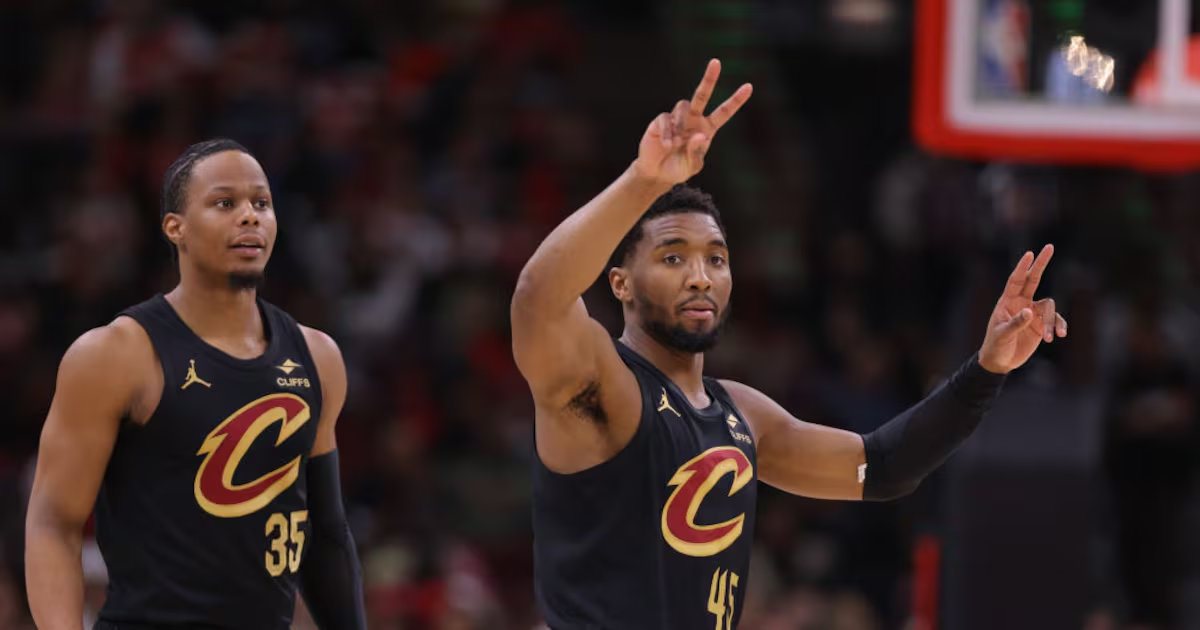
a recent study showed local NBA streaming viewers watched an average of 80 minutes per game, versus about 50 minutes for linear TV viewers
23
 NBA streaming fans watch longer – Sportico
.
That hints that if you target the most enthusiastic fans (the likely early adopters of GameTime), they will consume deeply – a trend media partners can capitalize on.
Ultimately, NBA GameTime aligns perfectly with partner interests by boosting viewership quantity and quality
(more minutes watched and more engaged viewers) across all outlets.
NBA streaming fans watch longer – Sportico
.
That hints that if you target the most enthusiastic fans (the likely early adopters of GameTime), they will consume deeply – a trend media partners can capitalize on.
Ultimately, NBA GameTime aligns perfectly with partner interests by boosting viewership quantity and quality
(more minutes watched and more engaged viewers) across all outlets.
5. Why Now?
The timing for NBA GameTime’s introduction could not be more opportune.
The NBA is entering a new era of media distribution – one that is both promising and perilous for viewership.
In 2024, the league inked a colossal $75+ billion, 11-year media rights deal (a ~160% increase per season over the last contract)
24
NBA media rights deal details – SBJ
,
bringing in new partners like NBC and Amazon alongside incumbent Disney (ABC/ESPN).
Starting in 2025–26, live NBA games will be available on more platforms than ever: broadcast TV, cable, multiple streaming apps, and likely direct-to-consumer services
22
NBA new media rights deal details – SBJ
25
NBA media rights deal details – SBJ
.
This fragmented landscape is both a response to shifting viewership habits and a bet on accessibility.
The league is essentially saying: “we’ll be wherever fans are – please watch.”
However, fragmentation also risks further splintering the audience and complicating how success is measured.
With games on Peacock, Prime Video, and regional streaming apps, it’s harder to tally who’s watching what.
Traditional Nielsen ratings struggle to capture streaming and out-of-home viewing in one neat number
26
Nielsen streaming challenges – Sportico
23
NBA streaming fans watch longer – Sportico
.
This is precisely the moment to introduce a unifying engagement metric like GameTime.
By providing a central hub that logs all viewing, the NBA can ensure that no matter how fans watch – on any platform – their engagement counts toward something.
It’s a way to bind together the new, fragmented distribution channels with a common thread of fan loyalty.
Moreover, the league’s stakeholders are hungry for verifiable, quantifiable engagement metrics in this new era.
Advertisers and broadcast partners need reassurance that fans aren’t just signing up for streaming trials and then tuning out.
A system that verifies “Fan X watched 3 hours of games this week across ESPN and Amazon” is incredibly valuable.
It’s no coincidence that the NBA and WNBA recently struck deals with Nielsen to better measure streaming viewership alongside traditional TV
27
 NBA/WNBA collaborate with Nielsen – Nielsen
– there is a recognized need for better data.
GameTime’s first-party data would complement these efforts and give the NBA a leg up in understanding its audience.
NBA/WNBA collaborate with Nielsen – Nielsen
– there is a recognized need for better data.
GameTime’s first-party data would complement these efforts and give the NBA a leg up in understanding its audience.
Also consider the context: live sports viewership across the board is under pressure
(even the NFL saw slight ratings dips recently
28
NFL 2023 viewership dips – Sports Media Watch
29
NFL ratings under scrutiny – NY Times
).
But unlike other leagues, the NBA has a massive digital-native fanbase it can tap into if it plays its cards right.
Now is the time to convert the NBA’s online army into reliable viewership.
Silver has already publicly stressed the importance of making games more accessible and engaging to digital audiences,
openly pondering how to entice social media fans back to live coverage
2
Adam Silver on NBA’s digital engagement challenge – Awful Announcing
.
The league is experimenting – adding in-stream betting to games and exploring alternate broadcasts, for instance
30
NBA innovates with in-stream betting – Sportico
– all aimed at enhancing the live game appeal for modern viewers.
GameTime fits into this zeitgeist as a bold, structural move to realign incentives.
Additionally, culturally, we’re at a moment where gamification and “status tracking” have gone mainstream and are well understood.
Ten years ago, a concept like GameTime might have needed educating the user.
Today, thanks to everything from fitness trackers to Spotify Wrapped, people love tracking their own behavior and comparing it with others.
Each December, social media lights up with millions of users sharing their Spotify Wrapped stats –
in 2022, nearly 160 million people engaged with Spotify Wrapped, and it generated over 400 million social media mentions in a matter of days
31
 Spotify Wrapped 2022 engagement stats – Spotify Newsroom
.
This phenomenon shows that users relish personalized stats when presented in a fun, social way.
Likewise, apps like Letterboxd have turned movie-watching into a social badge of honor, and Goodreads does the same for reading.
The concept of “I did this thing a lot, and here’s my profile to show for it” is now commonplace.
NBA GameTime would slot right into current fan culture by quantifying something fans already pride themselves on (watching their team) but never had a way to show off.
And with sports gambling becoming legal in many states, the idea of “put your money where your mouth is” is morphing into “put your minutes where your mouth is.”
Fans want to prove their loyalty and expertise – GameTime finally gives them a metric to do so.
All the pieces – technological, cultural, and business – have aligned for GameTime to launch now and succeed.
Spotify Wrapped 2022 engagement stats – Spotify Newsroom
.
This phenomenon shows that users relish personalized stats when presented in a fun, social way.
Likewise, apps like Letterboxd have turned movie-watching into a social badge of honor, and Goodreads does the same for reading.
The concept of “I did this thing a lot, and here’s my profile to show for it” is now commonplace.
NBA GameTime would slot right into current fan culture by quantifying something fans already pride themselves on (watching their team) but never had a way to show off.
And with sports gambling becoming legal in many states, the idea of “put your money where your mouth is” is morphing into “put your minutes where your mouth is.”
Fans want to prove their loyalty and expertise – GameTime finally gives them a metric to do so.
All the pieces – technological, cultural, and business – have aligned for GameTime to launch now and succeed.
6. The Cultural Catalyst
Beyond its immediate utility, NBA GameTime has the potential to become a cultural catalyst within sports fandom.
By turning viewership into a game-like competition, it would create a new kind of social currency among NBA fans.
“Did you even watch the game?” – once a derisive question on NBA Twitter – could become an objective stat.
Fans would flaunt their watch-time rankings the way gamers flaunt high scores or marathon runners their race times.
We can easily imagine the emergence of bragging rights and friendly rivalries:
Who are the top 10 GameTime fans of the Los Angeles Lakers?
Which NBA podcast host actually logs the most watch hours?
Public dashboards or leaderboards (opt-in) could show which city or fanbase watches the most, sparking endless debate and pride.
This kind of social proof can drive adoption virally.
For instance, Duolingo found that learners who share streaks with friends are 22% more likely to complete their daily lessons –
essentially, peer pressure and mutual motivation keep them more engaged
32
 Duolingo user statistics – Business of Apps
.
In the same vein, if NBA fans see their peers flexing a 100-hour watch streak, they’ll be motivated not to fall behind.
Duolingo user statistics – Business of Apps
.
In the same vein, if NBA fans see their peers flexing a 100-hour watch streak, they’ll be motivated not to fall behind.
Media personalities and influencers would amplify GameTime.
Think of prominent NBA figures – from journalists and podcasters to ex-players on TV –
commenting on their own GameTime status.
Some will embrace it humorously (e.g. an analyst tweeting “I’m finally a Hall of Fame watcher – 500 hours this season!”),
while others might become targets of jokes for low watch time (“Charles Barkley couldn’t care less – he’s still in the rookie tier on GameTime!”).
This dynamic creates a narrative about the fans that can run parallel to the narrative about the games.
It effectively turns the act of fandom into a sport of its own, one that media outlets and social communities can cover.
We’ve seen analogous things happen in other domains:
Spotify Wrapped has become a yearly internet event where even celebrities share their listening stats,
and it generates discussions about listening habits
31
Spotify Wrapped 2022 engagement stats – Spotify Newsroom
.
Likewise, we might see Reddit threads or segments on shows like NBA on TNT discussing which fanbases watch the most or which media member topped the GameTime charts.
Crucially, this is organic, meme-able content – it spreads because it’s fun and engaging, not because the NBA is pushing a marketing message.
GameTime would likely infiltrate the language of fandom (“He’s just a casual, his GameTime score is trash”) and become a meme in its own right.
Such cultural embedding is invaluable; it means the concept sells itself.
In essence, GameTime could ignite a positive competition to actually watch basketball. It takes a behavior that was once private and unmeasured – sitting down to watch a game – and turns it into a socially shareable achievement. That’s a powerful shift. When fans begin to chase watch-time milestones the way they chase likes or upvotes, the NBA will have succeeded in reorienting the fan culture back toward the live game. If NBA Twitter had a leaderboard for who actually watches the games — GameTime would be it. By being that catalyst, the platform doesn’t just reward existing habits; it has the potential to change habits. Fans who might normally just catch highlights could be enticed to watch live more often, lest they fall behind in the race. This is cultural alchemy – converting clout into viewership.
7. Long-Term Vision
While the core premise of NBA GameTime is straightforward (watch games, earn rewards), its long-term potential is expansive. Crucially, GameTime is envisioned as a platform, not a one-off gimmick – a foundation upon which many layers of fan engagement can be built over time. In the near term, the focus is on incentivizing viewership and establishing the rewards ecosystem. But once that infrastructure and user base exist, the NBA can explore numerous extensions:
- Integration with Fantasy Sports and Betting: The platform could sync with NBA fantasy leagues, granting bonus GameTime points for watching the players on your fantasy team live. With sports betting now mainstream, GameTime could partner with betting apps so that watch streaks and live bets unlock more loyalty points. The result would be a seamless loop of deeper engagement and cross-platform integration.
- Localized and Team-Based Rewards: GameTime can deepen team allegiance by offering city-specific or team-specific perks — like early ticket access or international fan recognition through gifts or shoutouts.
-
Merchandise and Collectibles:
GameTime points could unlock limited-edition merchandise or digital collectibles.
The NBA has already experimented with NFTs via Top Shot
33
NBA Top Shot collectible NFTs explained
34
NBA Top Shot sees huge NFT sales – Sportico
.
-
Social and Community Features:
As the user base grows, GameTime could add friend lists, team-up streaks,
or city-based leaderboards to encourage camaraderie and group challenges
32
Duolingo engagement stats – Business of Apps
.
-
Evolution of Rewards:
Over time, GameTime can evolve into a hub for premium fan experiences —
from League Pass redemptions to exclusive content access, or even participatory features like fan voting on minor league decisions
35
Socios and the rise of fan tokens – SportsPro
36
Socios sued over fan token marketing – Decrypt
.
-
Data-Driven Personalization:
GameTime can present annual viewing recaps like Spotify Wrapped —
“You watched 120 hours, your favorite team was the Knicks...”
31
Spotify Wrapped user engagement – Spotify Newsroom
.
These features expand GameTime’s role while keeping its mission focused: rewarding NBA viewership. Fantasy integration, social streaks, and exclusive collectibles all reinforce the act of watching live games.
The long-term vision for GameTime aligns with the broader direction of sports entertainment — where fans become active participants, and engagement is gamified. By recognizing fans' time as valuable, the NBA can deepen loyalty, personalize connections, and ultimately reimagine what it means to be a fan in the streaming era.
8. Conclusion
Not long ago, watching the games was the baseline of being an NBA fan – an assumed habit for any self-described supporter. Today, that assumption is no longer safe. The NBA’s younger fans are growing up in a world where being a “fan” might mean following the league’s every twist via Twitter and YouTube, but rarely sitting through a full live game. This new reality threatens the economic and cultural model that made the NBA a global phenomenon. NBA GameTime is a strategic response to this challenge, re-aligning fandom with viewership in a way that meets fans where they are now. By turning watching into a rewarding, trackable, and shareable experience, GameTime doesn’t just ask fans to watch more – it inspires them to, by making the act of watching games both fun and valuable on a personal level.
The benefits radiate in all directions. Fans get recognition and rewards for their passion, finally attaining a sense of personal achievement in fandom. The league gains richer engagement and data, strengthening its product at a critical juncture in the media landscape. Broadcast and streaming partners see a more engaged audience that is incentivized to use their services consistently. GameTime creates a positive feedback loop: more watching leads to more rewards, which leads to more fan satisfaction and even more watching. In an era when attention is the most precious commodity, the NBA would be explicitly valuing and rewarding attention – a smart trade to ensure the next generation of fans develops the habit of tuning in, not just logging on to social media post-game.
Ultimately, NBA GameTime is about making watching the game matter again.
It restores the act of viewing to the center of the fan experience, where it belongs.
By harnessing trends in gamification and digital engagement,
it modernizes the concept of loyalty for the streaming era.
This is not a gimmick or a fleeting promotion,
but a fundamental enhancement to the NBA’s relationship with its fans.
If implemented, GameTime could very well set a new standard across sports –
a model for how to turn avid followers into active viewers.
The NBA’s online popularity has proven that the interest is there;
now it’s time to convert that interest back into eyeballs on games.
NBA GameTime ensures that when the story of the NBA’s future is written,
watching the game won’t be a lost art,
but rather the most coveted badge of fandom – one point at a time
8
Survey: Sports fans increasingly prefer highlights – Axios
.